AlxeyPnferov/iStock/GettyImages
When you look up at the night sky, you may notice that stars flicker or twinkle. This phenomenon is not intrinsic to the stars themselves; rather, it is caused by the way Earth’s atmosphere bends starlight as it travels to our eyes.
Light always refracts—bends—when it passes through a medium. In the case of starlight, the medium is the Earth’s atmosphere, which is made up of layers of air with varying temperatures and densities. These layers shift constantly, creating turbulence. As starlight passes through these turbulent layers, it is refracted by regions of different density, producing the shimmering effect we see.
The degree of refraction depends on the angle at which you observe a star. A star directly overhead travels almost perpendicularly through the atmosphere, encountering minimal turbulence and thus twinkles less. Conversely, a star near the horizon must pass through a longer path of air, amplifying turbulence and making the twinkle more pronounced.
Planets are much closer to Earth than stars, so they appear as tiny disks rather than point sources of light. While their light also refracts through the atmosphere, the turbulent effects are spread across the visible disk, smoothing out the fluctuations. Therefore, planets rarely twinkle, though a slight flicker can occur when they are near the horizon.
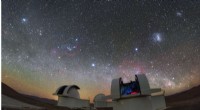
Professional astronomers employ several strategies to minimize the impact of atmospheric refraction. Many observatories are built on high mountain peaks to reduce the thickness of air starlight must traverse. Space telescopes, positioned beyond the atmosphere, provide completely unperturbed views. Additionally, adaptive optics systems detect atmospheric disturbances in real time and adjust deformable mirrors to correct the incoming light, delivering sharper images of distant stars.