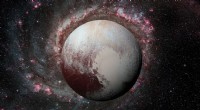
According to NASA, a dwarf planet meets three criteria: it orbits the Sun, has enough mass to assume a round shape, and has not cleared its orbit of other debris. Because it shares its orbital zone with similar‑sized bodies, it is not considered a dominant planet. Pluto is the best‑known example, having been reclassified from a planet in 2006.
Comets are icy bodies—often only a few kilometers across—originating in the Kuiper Belt or the distant Oort Cloud. When their perihelion brings them close to the Sun, solar heat vaporises surface ices. The released gas and dust form a glowing coma and, as the gas escapes, a bright, often colorful tail that points away from the Sun.
Asteroids are rocky or metallic fragments that orbit the Sun, mainly between Mars and Jupiter. They range from meter‑scale boulders to dwarf‑planet‑sized objects. Asteroids are classified as stony, metallic, or mixed. When a fragment reaches Earth’s atmosphere, it becomes a meteorite.
The term “satellite” refers to any body that orbits another, whether a natural moon or a human‑made spacecraft. Natural satellites include moons of planets such as Earth’s Moon or Jupiter’s Galilean moons. Artificial satellites orbit Earth and serve communications, navigation, and scientific missions. Note that dwarf planets and asteroids are not satellites of a larger body; they simply orbit the Sun.