Jupiterimages/Photos.com/Getty Images
For many years scientists thought Mercury faced the Sun with the same hemisphere, but in 1965 it was revealed that the planet rotates slowly—three rotations for every two orbits. Consequently, a Mercury “day” is slightly shorter than its year. With an axial tilt of only about 0°, seasonal changes are governed by the planet’s highly eccentric orbit. At perihelion (its closest approach to the Sun) daytime temperatures can soar to 465 °C (870 °F). When the Sun disappears, the lack of an atmosphere allows heat to escape, and nighttime temperatures plummet to –184 °C (–363 °F). The extreme range—over 600 °C—stems from Mercury’s thin exosphere and near‑zero atmospheric insulation.
Mercury’s surface temperature swings more dramatically than any other world in the Solar System. The difference of 649 °C (1,168 °F) far exceeds the extremes on Earth (≈160 °C, 288 °F) or Mars (≈160 °C, 288 °F). Venus, while almost as hot as Mercury’s peak temperature, maintains a nearly constant surface temperature because of its dense CO₂ atmosphere. The outer gas giants—Jupiter, Saturn, Uranus, and Neptune—exhibit surface temperatures comparable to Mercury’s coldest nights, yet their interiors become increasingly hot, driven by their massive cores.
Jupiter’s core reaches an astounding 24,000 °C (43,232 °F), hotter than the Sun’s surface, giving the planet the largest temperature gradient from surface to core among all planets. By contrast, Earth’s surface‑to‑core gradient is roughly 5,000 °C (9,000 °F). Mercury’s core is largely solid but molten at the center, producing a gradient similar to Earth’s rather than Jupiter’s.
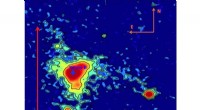
In November 2012, NASA’s MESSENGER spacecraft confirmed the presence of water ice in permanently shadowed craters at Mercury’s poles. These cold traps remain below –170 °C (–274 °F) because there is no atmospheric warming. The data indicate that exposed ice exists in the coldest corners of both poles, though the bulk of the ice is concealed beneath a layer of unusually dark material—suggesting that water ice is a major constituent of Mercury’s northern polar region.