By Tom Chmielewski Updated Mar 24, 2022
In astronomy, the term "transit" refers to a celestial body’s apparent passage across a defined line in the sky as seen from a specific location. Because the Sun and the Moon dominate the night sky from Earth’s perspective, their transits are of particular interest to both professional astronomers and amateur skywatchers.
The U.S. Naval Observatory (USNO) defines a transit as the instant a celestial object crosses an observer’s meridian—an imaginary north‑south line that extends from horizon to horizon. For the Sun, this event occurs at local solar noon, the time when the Sun reaches its highest point above the horizon. The exact moment of solar noon differs from civil noon by up to 15 minutes, depending on the observer’s longitude within their time zone. In mid‑latitude regions, the Sun’s transit lies neatly between sunrise and sunset, whereas at extreme latitudes the Sun can remain above the horizon for 24 hours, producing multiple transits in a single day.
The Moon’s transit follows the same meridian‑crossing definition, but its timing shifts throughout the lunar cycle. A new Moon, when its illuminated side faces away from Earth, passes the meridian almost simultaneously with solar noon. As the Moon advances to first quarter, its transit is delayed by roughly six hours. At full Moon, the transit occurs about twelve hours after solar noon, and the last‑quarter Moon crosses the meridian six hours before noon. These offsets arise from the Moon’s orbital motion and the changing relative positions of Earth, Sun, and Moon.
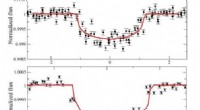
European Southern Observatory (ESO) uses a different concept of transit: an object passing across the face of a larger body. From Earth, this phenomenon allows us to witness planetary transits such as Venus or Mercury crossing the solar disk. Amateur astronomers have even photographed the International Space Station or a space shuttle silhouetted against the Sun. In a small telescope, the four Galilean moons of Jupiter regularly transit Jupiter’s bright face, offering a spectacular display for observers.
Nasa’s Solar TErrestrial RElations Observatory (STEREO) spacecraft, positioned several hundred million kilometers from Earth, captured the Moon’s transit of the Sun from a unique viewpoint. The resulting footage shows the Moon as a dark disc racing across the Sun’s surface. When the Moon blocks the Sun as seen from Earth, the event is termed an occultation rather than a transit; an occultation occurs when one object completely obscures another from the observer’s perspective.
Another definition of transit pertains to an object’s motion through the field of view of a fixed telescope. In this context, astronomers track stars as they drift across the eyepiece’s sights. When pointed at the Moon, a telescope can reveal dramatic lunar transits that showcase the Moon’s rugged terrain, as the observer appears to glide over its surface.