Earth is the densest major planet in the solar system, with a mean density of 5.52 g/cm³. Its bulk composition is roughly 34.6 % iron, 29.5 % oxygen, 15.2 % silicon, 12.7 % magnesium, 2.4 % nickel, 1.9 % sulfur, and 0.05 % titanium (USGS, 2020).
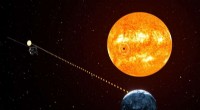
Situated in the Sun’s “habitable zone,” Earth orbits at an average distance of 1 AU (92,957,130 mi). This sweet spot allows liquid water to persist—critical for life. Had Earth orbited as close as Mercury or Venus, its atmosphere and oceans would have vaporized; too far out, like Mars or the gas giants, temperatures would be too low to support liquid water.
Earth’s equatorial diameter is 7,926 mi (12,742 km) and its circumference 24,902 mi (40,075 km). From pole to pole the diameter is 7,899 mi (12,714 km) and the meridional circumference 24,860 mi (40,008 km). The planet’s rotation flattens the poles and bulges the equator, giving it an oblate spheroid shape (NASA, 2021).
Earth’s axis is inclined 23.5° relative to the ecliptic. A full rotation takes 24 h, giving a surface speed of ~1,000 mph (1,600 km/h) at the equator. This axial tilt drives the seasonal cycle (NOAA, 2019).
Seventy‑one percent of Earth’s surface is covered by water—oceans, seas, and lakes—while the remaining 29 % is land. The planet’s hydrosphere drives weather, erosion, and the carbon cycle. Geological activity and plate tectonics continually reshape the surface, making the youngest continents only a few hundred million years old even though the planet itself is ~4.5 billion years old (USGS, 2020).
Earth consists of five layers: crust (up to 24 mi), upper mantle (≈224 mi), transition zone (≈250 mi), lower mantle (≈1,870 mi), and core (≈2,167 mi). The outer core is liquid iron‑nickel that generates the magnetic field, while the inner core is solid. The mantle contains silicate minerals like olivine and pyroxene, and the crust is dominated by quartz and basalt (USGS, 2020).