By Tricia Lobo — Updated March 24, 2022
Creating a miniature solar system with balloons and Styrofoam offers a tactile way to explore the relative sizes and orbits of the planets. This guide walks you through each step, ensuring your model is both accurate and visually engaging.
Take a 6‑inch yellow Styrofoam ball to represent the Sun. Place ten thumbtacks in a circular pattern around its equator; these will serve as anchors for the planet balloons.
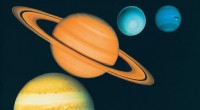
Inflate ten small water balloons. Scale the diameters to the Sun’s size: Mercury ~1 in, Venus & Earth ~1.5 in, Mars ~1.25 in, Jupiter 4 in, Saturn 3 in, Uranus 2.5 in, Neptune 2 in, Pluto 1.25 in. Each balloon should remain noticeably smaller than the Sun.
Use spray paint to give each balloon the planet’s characteristic hue—blue for Earth, red for Mars, etc. Add subtle touches: attach a small Monopoly house to Earth to hint at human influence, glue tiny rocks to Mercury, Venus, and Mars, and drape thin Styrofoam rings around Jupiter, Saturn, Uranus, and Neptune to represent their iconic rings.
Tie a short ribbon to the base of each balloon. Thread the ribbon through the thumbtack and around the Styrofoam Sun, then secure it with the tack. This creates a simple orbital path for each planet.
Use smaller Styrofoam spheres, metal pieces, or craft supplies to model moons, asteroids, or comet tails. Let your creativity fill in the details that enrich the model.
With these steps, you’ll have a colorful, hands‑on representation of our solar system that’s both educational and fun to display.