Source: Jupiterimages/liquidlibrary/Getty Images
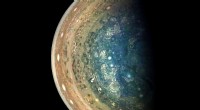
While Earth’s fiercest hurricanes rarely exceed 250 mph, the gas giants Jupiter and Saturn host super‑storms that dwarf any terrestrial tempest.
In 2010 the Cassini probe captured a colossal vortex, up to 12 000 km wide, detached from a massive thunderstorm. The feature is comparable in scale to Jupiter’s Oval BA but, unlike the Jovian storm, it produces lightning and intense turbulence.
At Saturn’s north pole, Cassini also recorded a hurricane resembling an Earth‑scale system. The storm spans roughly 2 000 km, its eye nearly 20 times the diameter of a typical terrestrial hurricane, powered by atmospheric water vapor.
The Great Red Spot, first noted by astronomers in 1831, is a persistent high‑pressure system covering about 20 000 km by 12 000 km. Winds at its periphery reach 400 km/h (250 mph) and the spot completes a full rotation every seven days. Its longevity and energy source remain subjects of active research.
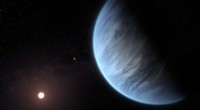
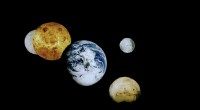
Other planets with substantial atmospheres also display weather phenomena: Mars endures planet‑wide dust storms; Venus has recorded lightning; and gas giants exhibit jet streams that shape cloud dynamics. Although these events cannot be observed directly from Earth, telescopic imaging and spacecraft missions allow scientists to study them in detail.