NASA/Getty Images News/Getty Images
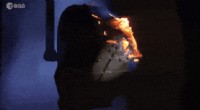
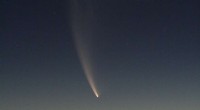
While the Sun is not a boiling pot of water, its outer atmosphere—the corona—is a seething plasma of ions and electrons. From this hot plasma stream the solar wind: a continuous flow of high‑energy particles that rushes outward at roughly 400 km/s (about 900,000 mph). Though its density is minuscule—only about five protons per cubic centimeter, far below the density of Earth's atmosphere—the solar wind plays a significant role in space weather and satellite operations.
During periods of intensified solar activity, the solar wind heats the upper layers of the atmosphere, causing them to expand. This expansion increases atmospheric drag on satellites in low Earth orbit. For satellites below roughly 1,000 km (620 mi), the added drag can lower their orbits by as much as 30 km (18 mi), requiring frequent orbit‑maintenance maneuvers.
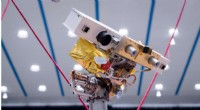
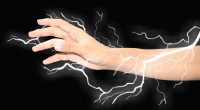
The charged particles in the solar wind can accumulate on a satellite’s surfaces, creating voltage differences between adjacent components. When a satellite moves between sunlight and shadow, these charges can discharge abruptly, producing micro‑scale lightning that may damage sensitive electronics. While satellites are engineered with shielding and grounding strategies to mitigate normal solar wind effects, intense bursts associated with coronal mass ejections (CMEs) can overwhelm these defenses.
The fastest particles in the solar wind carry enough energy to penetrate a satellite’s outer layers and damage microelectronic components. Although these high‑energy particles are relatively rare, their potential to destroy circuitry makes them a critical consideration in spacecraft design. Shielding materials and fault‑tolerant electronics help reduce but cannot eliminate the risk.
Charged particles from the solar wind are largely deflected by Earth’s magnetic field, directing them toward the polar regions and into the upper ionosphere. The influx of particles alters ionospheric conditions, which can degrade radio signal quality—either attenuating or enhancing certain frequencies. Such disturbances affect satellite communications and navigation systems, including the Global Positioning System.