Goodshoot/Goodshoot/Getty Images
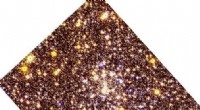
Astronomers define a red dwarf as a star with a mass between about 0.08 and 0.5 times that of the Sun, composed mainly of hydrogen. These stars are small and cool, with surface temperatures around 2,700 °C (4,900 °F), giving them a characteristic reddish glow. Because of their modest mass, red dwarfs fuse hydrogen very slowly, allowing them to shine for 20 billion to over 100 billion years—longer than the current age of the Universe.
The lifespan of a star is directly tied to its luminosity—the energy it emits each second. A star’s total energy output equals its luminosity multiplied by its lifetime. Massive stars begin life with more fuel but also burn it at a far faster rate, producing much greater luminosity. For instance, the Sun, with a surface temperature of 5,600 °C (10,000 °F), radiates far more energy than a red dwarf and has already been shining for about 5 billion years, with a projected total lifetime of roughly 10 billion years.
Stars generate light and heat through nuclear fusion: the conversion of hydrogen into helium under extreme pressure and temperature in the core. This process releases up to ten million times more energy than chemical combustion. Although fusion reactions are infrequent, they sustain a star’s brightness over millions to billions of years. When a star exhausts its hydrogen, it begins fusing heavier elements, progressing up to iron before its fuel runs out.
Most stars form from clouds of interstellar hydrogen and other elements. Gravitational collapse compresses the material until the core temperature is high enough for fusion. The star then spends the majority of its life fusing hydrogen into helium. Once hydrogen is depleted, the star expands and burns helium and subsequently heavier elements. Ultimately, the star’s fuel is exhausted and it undergoes a final collapse, which may produce a nova, supernova, or leave behind a white dwarf, neutron star, or black hole, depending on its original mass. Over time, white dwarfs and neutron stars cool and fade into dark remnants.