By Serm Murmson
Updated Mar 24, 2022
johnnorth/iStock/GettyImages
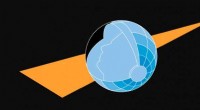
The ocean’s ebb and flow result from a delicate dance between three celestial bodies: the Sun, Earth, and Moon. Both the Sun and the Moon tug on Earth's waters with gravity, creating two tidal bulges that rotate with the planet. As the Moon shifts through its phases, the alignment of these forces subtly alters the bulges, producing distinct tidal patterns.
When the Moon and Sun line up—either on the same side of Earth during a new moon or on opposite sides during a full moon—their gravitational pulls combine. The resulting spring tides produce the highest high tides and the lowest low tides, making the sea level swing most dramatically.
During the first and third quarters, the Moon sits at a right angle to the Sun, with Earth at the vertex. The perpendicular forces partially cancel, leaving the smallest tidal bulge. These neap tides bring the most modest highs and lows.
As the Moon moves toward full or new phases, its gravitational influence strengthens. The bulges grow, and tides gradually swell toward spring‑tide extremes.
Moving toward the quarter phases, the Moon’s pull weakens. The bulges shrink, and tides taper back toward the gentle neap‑tide range.