Sandy Huffaker/Getty Images News/Getty Images
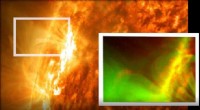
Solar flares—intense bursts of charged particles ejected from the Sun—travel across the solar system. When they collide with Earth's magnetic field, they can trigger spectacular auroras and, in severe cases, disrupt power grids and satellite communications. Since the first recorded observation in 1859, solar flares have continually challenged our technology and prompted rigorous scientific study.
In September 1859, British astronomer Richard Carrington captured the first direct observation of a solar flare. The resulting geomagnetic storm, now known as the Carrington Event, produced auroras visible as far south as the Caribbean. Telegraph lines across Europe and the United States sparked and burned, highlighting the vulnerability of early electrical infrastructure.
August 1972 saw a powerful solar flare that induced widespread power outages in Illinois and prompted AT&T to redesign its long‑range power cables. The event also raised concerns about astronaut safety during lunar missions, as increased solar radiation could pose significant health risks.
In March 1989, a similar flare caused a massive power failure in Quebec, leaving six million residents without electricity for nearly nine hours. Electrical equipment in regions as far south as New Jersey suffered damage, underscoring the far‑reaching effects of geomagnetic disturbances.
July 14, 2000, a less intense storm knocked out satellites and disrupted radio communications. Subsequent flares in 2003 and 2006 affected observation satellites, with one instrument sustaining damage while recording the event.
While no modern flare has matched the Carrington Event’s intensity, scientists estimate a one‑in‑eight chance of a comparable storm by 2020. Although the likelihood of catastrophic impacts remains low, continuous monitoring and preparedness are essential to safeguard critical infrastructure.