By Kevin Beck – Updated Aug 30, 2022
m-gucci/iStock/GettyImages
While Mercury and Venus can be seen with the naked eye, most of the planets in our solar system become truly fascinating when viewed through a telescope. This guide walks you through the equipment you need, the best viewing practices, and what you can expect to see on the first night you look up.
The first practical astronomical telescope appeared in the Netherlands in 1608. Galileo Galilei quickly improved the design, revealing the Moon’s craters and Jupiter’s four largest moons. His discoveries, which challenged prevailing Earth‑centric views, earned him both acclaim and persecution.
Mercury, the smallest planet, orbits the Sun every 88 days at a distance of ~39 million miles. Although close to the Sun, it has a thin atmosphere and is not the hottest planet. When it lies west of the Sun in the morning sky or east in the evening, it shines brightest. With a telescope, you can observe its phases, mirroring those of the Moon.
Venus is the brightest object in the night sky after the Sun and Moon, thanks to its thick, cloud‑covered atmosphere that reflects sunlight. Its surface temperatures reach ~900 °F, making surface exploration challenging. Through a telescope, you can detect subtle cloud band variations and observe its full set of phases.
Known as the “Red Planet,” Mars has a 687‑day year and is ~152 million miles from the Sun. Telescopic observations reveal polar ice caps, vast dust storms, and the famous Olympus Mons. Persistent viewing across seasons can show subtle atmospheric changes.
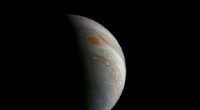
Jupiter’s Great Red Spot, a colossal storm, and its banded atmosphere are visible with even modest telescopes. Its four largest moons—Ganymede, Europa, Io, and Callisto—are also easily spotted. Jupiter’s immense gravity and magnetic field have made it a focal point of planetary science.
Saturn’s iconic rings are a highlight for amateur astronomers. The rings’ appearance changes with Earth’s viewing angle; at times you may see the Cassini Division, a dark gap between the main rings. High‑magnification views reveal ring particles and subtle structures.
Uranus, located ~1.85 billion miles from the Sun, has an axial tilt of ~98°, causing it to “roll” on its orbit. Its rings appear almost vertical to observers on Earth. While the planet itself appears as a faint blue star, a telescope reveals its slight oblateness and faint ring system.
Neptune, ~2.7 billion miles from the Sun, is the most distant planet visible to the unaided eye. It boasts wind speeds exceeding 1,500 mph and its largest moon, Triton. With a telescope, you can occasionally detect Triton against Neptune’s faint blue disk.
Our solar system is part of the Milky Way. The nearest spiral galaxy, Andromeda (M31), can be seen as a faint smudge in the night sky. An 8‑ or 10‑inch telescope may reveal its spiral arms under optimal conditions.
With the right equipment and a little patience, you’ll uncover the striking details of our planetary neighbors and deepen your appreciation for the dynamic solar system we inhabit.