By Chris Deziel
Updated Aug 30, 2022
John White Photos/Moment/GettyImages
Understanding cometary orbits starts with a basic grasp of planetary motion. Although the Sun’s gravity allows for vast open space, the planets, with the exception of Pluto, confine themselves to a relatively thin band around the Sun, rarely deviating more than a few degrees from this plane.
Comets, by contrast, can have orbits that are highly inclined—sometimes nearly perpendicular—to this band. Their paths are shaped by their origins and the forces that carried them into the inner Solar System.
Kepler’s first law tells us that all objects orbit the Sun in ellipses, with the Sun at one focus. Planetary orbits are almost circular, as are the trajectories of most Kuiper‑belt asteroids and icy bodies. Short‑period comets, which emerge from the Kuiper Belt, share this near‑circular, planet‑like band.
Long‑period comets originate farther out, in the Oort Cloud—a distant spherical shell surrounding the Solar System. Their orbits can be so elongated that a comet may be invisible for centuries or even millennia. Some are on parabolic trajectories, meaning they pass through the Solar System only once before heading back into interstellar space.
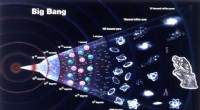
The Sun formed from a collapsing cloud of gas and dust 4.6 billion years ago. As gravity pulled material together, conservation of angular momentum caused the matter to spin, forming a flattened disk. The core heated enough to ignite hydrogen fusion, halting further accretion.
Remaining clumps in the disk coalesced into planets. Those on the periphery, far enough to escape the dense inner disk yet still bound by gravity, became dwarf planets, asteroids, and the icy bodies that would later become comets.
Asteroids are predominantly rocky or metallic. Comets are often described as “dirty snowballs,” composed of ice, dust, and frozen gases. Far from the Sun, a comet’s icy core is virtually indistinguishable from an asteroid. When it approaches the Sun, solar heat vaporizes the ice, forming a glowing coma and a tail that can extend from Earth to the Sun—always pointing away from the Sun due to solar wind.
Long‑period comets can travel across the Solar System in orbits with periods exceeding a human lifetime. Kepler’s second law means they move slowly at aphelion, spending most of their time invisible. However, unless perturbed, they will return.
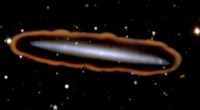
Occasionally, we encounter interstellar objects—comets or asteroids that entered the Solar System on a hyperbolic, non‑bound trajectory. The most famous example is ‘Oumuamua, detected in 2017. It exhibited a cigar‑shaped profile and moved at speeds inconsistent with a bound orbit, suggesting an interstellar origin.
Halley’s Comet, first identified by Edmund Halley in the 18th century, exemplifies the dynamics of a short‑period comet. Its orbital period is approximately 74–79 years, influenced by gravitational nudges from planets like Venus and by outgassing jets that act as a subtle propulsion system.
With an eccentricity of ~0.97, Halley’s orbit is highly elongated—far more so than Earth’s (0.02) or Pluto’s (0.25). It travels from a perihelion of 0.6 AU to an aphelion beyond Pluto’s orbit.
Its inclination of 18° relative to the ecliptic and retrograde rotation (opposite to the direction of orbital motion) suggest it did not form within the same protoplanetary disk that birthed the planets.
Studying comet orbits reveals the dynamical history of the Solar System, the distribution of icy bodies in the outer reaches, and the potential impact risk from long‑period or interstellar objects. It also underscores the diversity of small bodies that orbit our Sun.