By Michael Black
Updated Aug 30, 2022
The fundamental distinctions among the universe, galaxies, and solar systems form the backbone of astronomy. While the science can be intricate, these core concepts are approachable for anyone and are typically introduced in middle or high school science curricula.
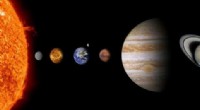
A solar system is the smallest of the three structures. It consists of a star—such as the Sun—and the bodies bound by its gravity, including planets, moons, asteroids, comets, and meteoroids. Even the tiniest solar system challenges human intuition; if the Sun were the size of a tennis ball, Earth would be a grain of sand roughly eight meters (26 feet) away.
Galaxies are vast assemblies of stars, solar systems, and interstellar matter, all held together by gravity. Within a galaxy, solar systems are separated by immense stretches of largely empty space. The Milky Way, home to our Sun and planetary system, contains more than 200 billion stars. Solar systems orbit the galactic center much like planets orbit their stars, with the Solar System completing one orbit every 200–250 million years.
The universe encompasses everything: all galaxies, solar systems, and the physical laws that govern them. Current cosmological models indicate that the universe is continuously expanding, a phenomenon traced back to the Big Bang—a colossal explosion of super‑condensed matter that gave birth to space, time, and all known matter.
Scale is the primary distinction among the universe, galaxies, and solar systems, but other differences matter too. Black holes—regions of space with gravitational pull so intense that even light cannot escape—often sit at the hearts of galaxies. Between galaxies lie colossal gas clouds called nebulae, which, while not part of any single galaxy or solar system, play a crucial role in star formation.
Understanding these layers—from the local Solar System to the cosmic web of the universe—provides insight into the architecture of the cosmos and the forces that shape it.