Ablestock.com/AbleStock.com/Getty Images
Mass is the amount of matter in an object, and it remains constant regardless of location. Weight, however, is the force exerted by gravity on that mass. On Earth, an astronaut weighing 70 kg exerts a weight of about 686 N. On the Moon, with roughly one‑sixth Earth’s gravity, the same astronaut’s weight drops to approximately 114 N.
Density is mass divided by volume. A typical astronaut might have a mass of 68 kg and occupy a volume of 65 L, yielding a density of about 1.05 kg L⁻¹—very close to water’s 1.00 kg L⁻¹. Humans are composed of roughly 60 % water, which explains the similarity.
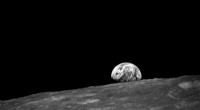
When an astronaut moves from Earth to the Moon, only their weight changes; mass stays the same. The lunar environment offers negligible air pressure, so the astronaut’s volume remains essentially unchanged. Consequently, density—a ratio of constant mass to constant volume—remains unchanged.
In reality, astronauts spend months in microgravity, which can cause bone loss, muscle atrophy, and fluid redistribution. These effects can reduce overall body mass slightly, potentially lowering density over time. However, the fundamental physics of density remain unchanged.
For more detailed information, see NASA’s Human Research Program (NASA HRP).