Simon Willms/Lifesize/Getty Images
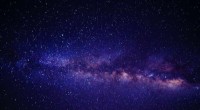
Ever notice how the city skyline dims the starry canopy? While air pollution can blur the view, the dominant culprit is light pollution—unnecessary artificial illumination that washes out the night sky. The closer we stand to bright sources, the more our celestial view is compromised.
Directing light is the simplest tactic to curb skyglow. For a classroom demonstration, attach bulbs to a variety of shades—rimmed, full, and partial—and observe the difference. An unshaded lamp emits light omnidirectionally, flooding the surroundings, whereas a properly angled shade channels photons downward, keeping the sky darker. Position the two lamps beside a simulated night sky and let participants compare the visibility of stars and constellations. The shaded lamp should reveal a noticeably richer stellar field.
Color matters. Our rods and cones respond differently across wavelengths; in darkness, blue‑green photons overwhelm red, making red light the least disruptive to night vision. Consequently, observatories employ red lanterns to preserve dark‑adaptation. For a hands‑on experiment, present participants with red, blue, green, and white LEDs, then challenge them to spot faint dots or stars under each illumination. Record how visibility changes with color.
Global disparities in artificial lighting are starkly displayed on night‑time satellite maps—glowing swaths over cities, a pale band over rural expanses. To bring the data home, have students compile local measurements using smartphone light meters or online databases such as the World Atlas of Artificial Night Lighting. Compare the brightness of their hometown to a nearby designated dark‑sky reserve, and plot the contrast on a custom map.
Empirical observation is the most compelling evidence. Gather a cardboard tube—think a makeshift pinhole telescope—cast from toilet paper or paper towels. From your current location, scan a fixed patch of sky and tally the visible stars. Then relocate to a dimmer or brighter site and repeat. If star counts drop, sketch the sky and note the difference. Collating these observations across sites illuminates the tangible impact of light pollution.