By Cindy Quarters – Updated Aug 30, 2022
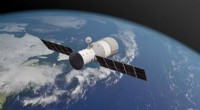
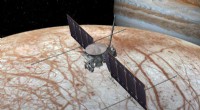
A satellite is an object that orbits another celestial body. While moons are natural satellites, artificial ones are launched into space aboard rockets and released into precise orbits. According to National Geographic, over 1,000 man‑made satellites currently orbit Earth, and they also serve as probes to Mars, Jupiter, the Sun, and beyond.
Weather satellites continually stream data—temperature, rainfall, wind speed, and cloud patterns—to ground stations worldwide. Meteorologists use this real‑time information to model weather systems and issue warnings for severe storms, giving communities precious time to seek shelter or evacuate from tornadoes and hurricanes.
Communications satellites act as relays that transmit signals from one point on Earth to another. Most are geosynchronous, remaining fixed over a single longitude. They carry telephone traffic, mobile data, ship‑to‑shore radio, and broadcast television and radio, ensuring reliable connectivity across continents.
Many satellites carry cameras that capture high‑resolution images and infrared data, allowing scientists to monitor remote or inaccessible regions such as polar ice caps, deforestation zones, and urban growth. These observations support climate research, disaster response, and resource management.
Space telescopes like the Hubble Space Telescope orbit Earth and point their instruments toward distant stars, nebulae, and galaxies. Free from atmospheric distortion, Hubble delivers sharp images that astronomers analyze and share with the public via the Hubble Gallery on Wired Science. On the planetary side, NASA’s Mars Reconnaissance Orbiter supplies detailed maps that Google Earth incorporated in 2009, letting users explore Martian terrain directly from their browsers.