By Kevin Lee | Updated Aug 30, 2022
The bright dot you often spot in the evening western sky is usually Venus, the planet known for its dazzling glow. However, other celestial bodies and even artificial satellites can also catch your eye.
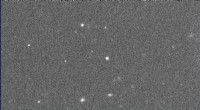
Planets shine by reflecting sunlight. Venus, orbiting closer to the Sun than Earth, is wrapped in thick, reflective clouds that bounce most of the Sun’s rays back into space, making it the brightest planet in our sky. Earth itself appears as a faint pinprick of light from the Voyager 1 spacecraft, 6.4 billion km (4 billion miles) away.
Venus is not always visible after sunset. Its apparent position depends on the relative alignment of Earth, the Sun, and Venus. At certain times it can be a morning star before dawn, while at other times it shines after dusk. Websites such as EarthSky and Space.com provide up‑to‑date sky‑watching tips.
While Venus dominates, Mars, Mercury, and Jupiter occasionally make their way into the western sky. Jupiter can outshine any star after it rises in the east and journeys toward the west. Mars, under the right conditions, can shine roughly 10° below Venus. On March 11, 2015, Uranus appeared just below Mars—though it was 158 times fainter than our red planet.
Our Milky Way hosts billions of stars, a few thousand of which our naked eye can spot. Aldebaran, about 35–40 times larger than the Sun, ranks 14th brightest and may appear in the west around sunset. The Winter Circle—a ring of bright stars—rises in the east and gradually sets in the southwest, offering another spectacular sight.
The International Space Station (ISS) is the brightest spacecraft in orbit. It glows by reflecting sunlight and often traverses from west to east across the sky. When it passes overhead, only the Moon and Venus compete for brilliance. Check NASA’s Spot the Station for the next visible pass.