By Chris Deziel, Updated Aug 30, 2022
Wavebreakmedia Ltd/Wavebreak Media/Getty Images
The Earth is a near‑spherical body, allowing us to estimate its volume using basic geometry once its radius is known. Modern geophysicists use satellite data, gravity measurements, and seismic imaging to refine these values, but the ancient Greeks also achieved remarkable accuracy by observing the Sun.
For a sphere, volume is calculated with the formula V = 4/3 π r³, where r is the radius. Earth’s equatorial radius is 6,378.1 km (3,963.2 mi) and its polar radius is 6,356.8 km (3,949.9 mi). Averaging these gives a mean radius of 6,371.0 km (3,958.7 mi). Plugging this into the formula yields an approximate volume of 1.08 quadrillion cubic km (259 trillion cubic mi).
Greek astronomer Eratosthenes pioneered a method to estimate Earth’s circumference by comparing the sun’s angle at two locations separated by a known distance. By applying trigonometry, he deduced a circumference close to the modern value, and from that calculated a radius that matched the present figure within a few percent.
Seismic studies reveal a layered interior: a solid inner core (iron) with a radius of 1,220 km (758 mi), surrounded by a liquid outer core extending to 3,480 km (2,162 mi). This outer core represents about 55 % of Earth’s radius and is crucial for generating the planet’s magnetic field.
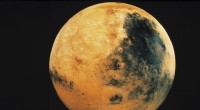
Earth is the largest of the four rocky planets in the inner solar system. Venus, its near twin, has 86 % of Earth’s volume. Mars and Mercury contain only 15 % and 5 % of Earth’s volume, respectively—so roughly six Mars-sized and twenty Mercury-sized bodies could fit inside Earth. Conversely, 1,321 Earth-sized planets would fit inside Jupiter, and about 1.3 million would fit inside the Sun.
For more detailed data, see resources from NASA (NASA) and the USGS (USGS).