FOTOKITA/Shutterstock
The Moon has guided calendars, myths, and science for millennia. Its phases dictate months, tides, and cultural rituals. Today we still observe and name its cycles, from the “Harvest Moon” to the more elusive “blue moon.” When a blue moon aligns with a supermoon, the result is a super blue moon—an event that, while purely visual, captures the imagination of sky‑watchers worldwide.
Sanja Baljkas/Getty Images
The term “blue moon” originally meant something unlikely or impossible. After Krakatoa’s 1883 eruption, the Moon briefly appeared bluish in parts of the world, turning the phrase into a rare astronomical event. In modern usage, a blue moon is the second full moon in a calendar month or, in the older tradition, the third full moon in a season that has four instead of the usual three. This naming preserves the traditional month‑to‑month alignment of lunar phases.
Jasmin Merdan/Getty Images
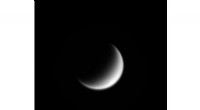
The Moon’s elliptical orbit means its distance from Earth varies between perigee (closest) and apogee (farthest). During perigee, the Moon appears roughly 15% larger and up to 30% brighter than at apogee. When a full moon coincides with perigee, astronomers call it a supermoon; when it coincides with apogee, it is a micromoon. Though the term was popularized by astrologer Richard Nolle, NASA’s informal definition counts a supermoon as any full moon within 90% of the perigee distance. Consequently, a year can contain four to five supermoons, and occasionally two can occur in a single month.
Lukasz Pawel Szczepanski/Shutterstock
Blue moons appear roughly seven times every 19 years—a 3% chance in any given month. Supermoons are far more frequent, with about a 25% chance per month. Multiplying these probabilities gives an estimated 1% chance for a super blue moon each month, translating to roughly one event every 10 to 20 years. While the exact timing varies, astronomers can predict future occurrences with calendar calculations.
Cindy Kassab/Getty Images
The visual spectacle of a super blue moon does not alter the Moon’s or Earth’s physics. However, a supermoon’s closer proximity amplifies tidal forces, making spring tides— the highest tides during new and full moons—slightly more pronounced. Although some studies have linked lunar tidal stresses to seismic activity, the overall correlation remains weak; the most significant effect is the modest increase in tidal amplitude.
Sjo/Getty Images
Beyond blue and supermoons, several culturally significant lunar events exist. A “blood moon” occurs during a total lunar eclipse, turning the Moon crimson as sunlight passes through Earth’s atmosphere. A “black moon,” the second new moon in a month, is invisible to the naked eye. Many cultures also assign names to each full moon of the year— the “Harvest Moon” being the full moon nearest the autumn equinox. An event combining a supermoon, blue moon, and blood moon would be astronomically rare; the next such occurrence is projected for September 30, 3280.