For centuries, humanity has been drawn to the mystery of life beyond Earth. Among the most tantalizing targets is Mars, whose polar ice caps and ancient geological record hint at a past that may have once supported life.
In a 2024 paper published in Communications Earth & Environment, researchers argue that microbial ecosystems could exist beneath the planet’s frozen surface. They note that ultraviolet (UV) radiation, which penetrates the thin Martian atmosphere by roughly 30 % more than on Earth, can still reach several meters below the ice. On Earth, such depths host pools of meltwater teeming with algae, fungi, and photosynthetic microbes, and the authors contend Mars could support a similar niche.
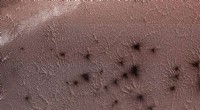
While Mars lacks a protective ozone layer and magnetic field, models show that mid‑latitude ice deposits could create micro‑habitats. Dust‑laden snow exposed to sunlight may heat enough to melt, forming pockets of liquid water a few feet beneath the surface—shielded from the harsh environment above.
Lead author Aditya Khuller of NASA’s Jet Propulsion Laboratory and co‑author Phil Christensen of Arizona State University first outlined this concept in a 2021 study in the Journal of Geophysical Research: Planets that examined dusty water ice in Martian gullies. Khuller stated, “If we’re trying to find life anywhere in the universe today, Martian ice exposures are probably one of the most accessible places we should be looking” (JPL).
Today, Mars averages –81 °F and its atmosphere is 95.3 % carbon dioxide, conditions that render liquid water unstable. UV radiation is intense, and the absence of a magnetic field exposes the surface to relentless solar bombardment.
However, a 2022 study by researchers at the University of Arizona, published in Nature Astronomy, suggests that the planet once boasted a denser atmosphere rich in hydrogen and carbon dioxide. This early atmosphere would have allowed surface water flows and could have sustained methanogenic microbes underground, similar to those found on Earth. The loss of Mars’ magnetic field about 3 billion years ago, and the subsequent stripping of its atmosphere by solar winds, left the planet as the cold, dry desert we see today.
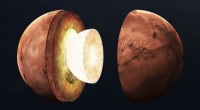
Evidence of water on the surface and subsurface continues to accumulate. NASA’s InSight seismometer, which landed in 2018, detected an earthquake triggered by a meteoroid impact that revealed subsurface ice—a potential resource for future astronauts. Since 2021, the Perseverance rover has sampled ancient lake beds, further illuminating Mars’ watery history, and its instruments have successfully extracted oxygen from atmospheric CO₂, a critical step toward sustained human presence.
Collectively, these findings underscore the plausibility that microbial life—either extant or extinct—could exist in protected niches beneath Martian ice. Such environments represent promising targets for future exploration missions seeking definitive evidence of life beyond Earth.