Fiona M. Donnelly/Shutterstock
Staring up at the night sky, the constellation Cassiopeia hides a faint glow just beyond its brightest star, Schedar. That glow is the Andromeda galaxy—our nearest spiral neighbor. Astronomers predict that in about 4 billion years, Andromeda will collide with the Milky Way, reshaping both galaxies into a single, larger elliptical system. Although the term “collision” evokes dramatic imagery, the event will unfold gradually, much like the Sun’s eventual expansion into a red giant.
A recent paper in Nature Astronomy from researchers at Swinburne University of Technology challenges the idea that the merger is still centuries away. The study shows that galaxies are surrounded by vast, invisible halos of gas—stretching up to a million light‑years, more than ten times the extent of their starlight. This discovery suggests that the Milky Way’s and Andromeda’s gaseous envelopes may already be overlapping, meaning the collision may have begun well before the stars themselves finally meet.
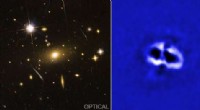
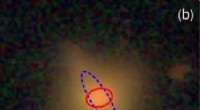
Using the Keck Cosmic Web Imager in Hawaii, scientists captured the first detailed image of such a massive circumgalactic medium (CGM) around the distant galaxy IRAS08339+6517, located roughly 270 million light‑years from Earth. The CGM contains about 70% of a galaxy’s visible mass, a figure that was previously hard to pin down due to imaging limitations. By applying deep imaging techniques, the team could delineate where the galaxy’s influence ends and the CGM begins, clarifying the fuzzy boundaries that separate a galaxy from the cosmic web that surrounds it.
"We are now able to see the exact point where a galaxy’s gravity stops dominating and the gas becomes part of the larger intergalactic environment," said Dr. Nikole M. Nielsen, a lead author of the study. "These boundaries have always been nebulous, but our observations make them concrete.”
Understanding the CGM is crucial because it governs the flow of gas into and out of galaxies—a process that fuels star formation and shapes galactic evolution. The overlapping halos of the Milky Way and Andromeda imply that their interstellar gases are already mingling, potentially accelerating the eventual merger or altering its dynamics in ways we are only beginning to grasp.
Andromeda is moving toward the Milky Way at a staggering 250,000 mph. While the stars themselves won’t collide for billions of years, the interaction between the two galaxies’ massive gas halos could produce observable effects sooner than previously expected.
Ultimately, the ongoing convergence of the Milky Way and Andromeda will reshape our cosmic neighborhood. Though the final collision is billions of years away, the initial stages—revealed by the overlapping CGMs—are unfolding right now, reshaping our understanding of galactic interactions.
© 2024 Swinburne University of Technology. Photo: Fiona M. Donnelly/Shutterstock.
Carlos Fernandez/Getty Images
By mapping the CGM with the Keck Cosmic Web Imager, researchers have clarified the transition zone where a galaxy’s influence fades into the intergalactic medium, providing a clearer definition of a galaxy’s true extent.
Wirestock Creators/Shutterstock
These findings not only deepen our grasp of galactic structure but also sharpen predictions for the Milky Way–Andromeda merger, underscoring the dynamic nature of the universe we inhabit.