Allexxandar/Shutterstock
Corona Borealis may not be the most dazzling constellation, but its name—"northern crown"—hints at a spectacular event in 2025 that could illuminate the night sky brighter than any modern light pollution can hide.
Just beyond the dim semicircle of Corona Borealis lies T Coronae Borealis, also known as T CrB or the Blaze Star. Though invisible to the naked eye most nights, this recurrent nova is poised to erupt, briefly becoming one of the brightest objects ever seen from Earth.
How can astronomers predict such an explosion? T CrB is a well‑studied binary system first recorded in 1217. Its eruptions appear roughly every 80 years, the last one in 1946. Recent observations in 2023 indicate a dimming trend that historically precedes a nova, suggesting the next eruption may occur soon.
Mark Garlick/science Photo Library/Getty Images
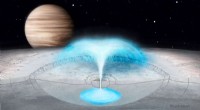
T CrB consists of a white dwarf orbiting a red giant. The white dwarf’s immense gravity siphons gas from its companion, forming an accretion disk. Over decades, the accumulated material increases pressure and temperature on the white dwarf’s surface until a thermonuclear runaway erupts, releasing an intense flash of light.
After the outburst, the cycle restarts, eventually leading to the next nova event.
Javier Zayas Photography/Getty Images
While both novae and supernovae produce temporary brightness spikes, their origins differ. Novae arise in binary systems where a white dwarf accretes matter from a companion; supernovae result from either the catastrophic collapse of a massive star (Type II) or the runaway fusion in a white dwarf that exceeds the Chandrasekhar limit (Type I). Novae can outshine the Sun by up to 100,000 times, whereas supernovae can outshine it by billions of times.
Recurrent novae like T CrB are relatively common, but this system is expected to be among the brightest novae recorded. Astronomer Bradley Schaefer has even dubbed it the "brightest nova of the generation."
Tose/Getty Images
T CrB’s current magnitude is +10—far too dim for the naked eye. When the nova occurs, its brightness will surge to about +2, rivaling Polaris, the North Star. Despite being over 2,500 light‑years away—roughly 2,500 times farther than Polaris—this magnitude demonstrates the extraordinary luminosity of a nova.
istiana wati/Shutterstock
Although the 1946 eruption is 78 years behind us, astronomers are monitoring T CrB for the telltale pre‑eruption dimming that precedes a nova. The 80‑year interval suggests an event around 2026, yet recent data indicate it could happen as early as late 2024. The exact date remains uncertain, but the star will announce itself with a sudden flare.
M‑gucci/Getty Images
For stargazers in the Northern Hemisphere, the nova will be visible to the naked eye, even in light‑polluted skies. Locate Corona Borealis by drawing an imaginary line between Vega and Arcturus; the constellation lies near the center of that line. Practice locating it now, so you can spot the sudden brightening when the eruption occurs.
Once the nova erupts, the heightened brightness will last only a few days before the cycle recommences. Capture this rare celestial spectacle and share it with the world.