Anton Petrus/Getty Images
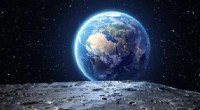
For billions of years, the Moon has shaped Earth’s destiny—from stabilizing our planet’s tilt to powering the tides that drive coastal ecosystems. Scientific consensus holds that Earth’s Moon formed roughly 4.5 billion years ago when a Mars‑sized body slammed into the nascent planet. The collision not only created the Moon but also imparted the 23.5° axial tilt that gives us our seasons.
While the Sun’s light is the obvious driver of seasonal change, the Moon’s gravity is the quiet hand that keeps Earth’s tilt steady. The 23.5° obliquity is the result of that ancient impact, and the Moon’s pull prevents the North Pole from drifting toward the Sun. In a moonless world, Earth’s axis could wobble, leading to unpredictable weather and erratic seasonal patterns that could threaten agriculture, wildlife, and human infrastructure.
Our 24‑hour day is the product of a delicate tug‑of‑war between Earth’s rotation and the Moon’s tidal braking. The Moon has been gradually pulling rotational energy from Earth, causing the planet’s spin to slow and the day to lengthen. Today the average day is 24 h; about 650 million years ago it was roughly 22 h, and before the Moon’s influence it may have been only six hours long. Without the Moon, Earth’s rotation would likely accelerate, shortening the day and altering circadian rhythms worldwide.
Although the Sun also exerts tidal forces, the Moon’s proximity makes its influence dominant. The rhythmic pull stretches Earth slightly, generating the familiar high‑and‑low tide cycle. Removing the Moon would reduce tidal ranges to roughly one‑third of their current magnitude. Such a drastic change would disrupt coastal ecosystems—species that rely on tidal mixing for food and reproduction, like mussels, crabs, and certain fish, could face extinction.
Beyond tides, the Moon’s gravity helps keep Earth’s rotational axis on a smooth path. This stability moderates the extremes of temperature that could otherwise sweep across the planet. Comparisons with Venus and Mercury—planets without sizable moons—show that a lack of orbital stabilization can lead to severe climate extremes, such as the runaway greenhouse on Venus. Earth’s climate could similarly swing toward extremes of heat and cold if the Moon were absent.
Many organisms have evolved rhythms tied to lunar cycles. Nocturnal predators, for instance, use moonlight for hunting, and species such as wolves and owls rely on that light to navigate the dark. The salmon’s migration is guided by lunar phases, with spawning timed to new or full moons. Coral spawning events are synchronized with full‑moon nights. A sudden disappearance of lunar illumination and gravity would likely disorient these species, jeopardizing their survival and the human industries that depend on them.
While humans could theoretically adapt to a moonless world, the cascading effects on climate, day length, tides, and ecosystems would reshape Earth in profound ways.
Anton Petrus/Getty Images