Jan Garbers/Shutterstock
The Perseid meteor shower, widely regarded as the most spectacular annual celestial event, will return in 2025. Beginning on July 17 and continuing through August 23, the shower will light up the Northern Hemisphere with thousands of bright meteors every hour.
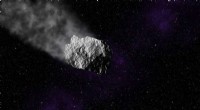
Behind this breathtaking display lies Comet Swift‑Tuttle, an elongated celestial body approximately twice the size of the dinosaur‑killing impactor. Although Swift‑Tuttle currently orbits safely 133 years per cycle and last crossed the inner solar system in 1992, it poses no collision threat to Earth. Instead, its rocky debris forms a dense trail that Earth intersects each summer.
Every time our planet passes through this debris field, fragments of the comet enter the atmosphere and produce the dazzling fireballs known as the Perseids. If you're worried about meteors striking the ground, the numbers are reassuring: less than 5 % of meteors survive to become meteorites.
While the terms are related, they refer to different stages of a space rock’s journey. Meteoroids are the loose particles drifting in space; when they collide with Earth’s atmosphere, they ignite and become meteors—visible streaks traveling at about 133,200 mph. The resulting heat can exceed 3,000 °F, producing the brilliant fireballs that characterize the Perseid shower. Only a tiny fraction of these meteors reach the surface, transforming into meteorites.
Peak activity will occur mid‑August, with an average of roughly 100 meteors per hour. The radiant point lies in the constellation Perseus, so orient your view toward that area of the sky. For optimal visibility, choose a dark site away from city lights and look toward the Perseus constellation during the evening hours.
Note that a full moon on August 9 will brighten the sky just before the peak, slightly reducing visibility. The best viewing window is actually between July 18 and 28, when the moon is waning and the sky is darkest. By timing your observations to these dates, you can enjoy the full brilliance of the Perseid meteor shower.
If you miss this year’s display, don’t worry—Perseids return every summer, offering another chance to witness one of the most reliable and awe‑inspiring sky events.