In film, a rogue asteroid is destroyed with a dramatic explosion. In reality, NASA’s Double Asteroid Redirection Test (DART) proved that a kinetic impact can shift an asteroid’s path.
In 2022, the DART spacecraft slammed into Dimorphos—the moon of 65803 Didymos—at about 15,000 mph. The collision altered Dimorphos’s orbit by 32 minutes, far exceeding the planned 73‑second shift, and reshaped the small body.
While the primary goal was achieved, a July 2025 study in The Planetary Science Journal revealed that the impact released a cloud of boulders that complicates future deflection efforts.
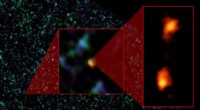
LICIACube, the ESA’s Italian cubesat, captured high‑resolution images of the debris field. Researchers led by Tony Farnham of the University of Maryland identified 104 boulders ranging from 0.7 to 11.8 ft in radius, ejected at speeds up to 52 m/s (116 mph). These fragments carried roughly three times the momentum of the DART craft.
Rather than dispersing randomly, the boulders formed two distinct clusters, suggesting forces at play beyond the simple impact mechanics.
Because the ejecta imparted a significant “kick” perpendicular to DART’s trajectory, the net change in Dimorphos’s motion is more complex than originally modeled. Future missions will need to account for surface heterogeneity, ejecta mass, and directional momentum when designing kinetic‑impact deflection strategies.
Comparisons with NASA’s 2007 Deep Impact mission— which struck a smooth, boulder‑free comet surface— show that surface type dramatically influences the outcome. In the case of Dimorphos, the rocky terrain produced the unexpected cluster behavior.
Ongoing analysis aims to refine our understanding of impact dynamics, enabling more reliable asteroid deflection techniques for potential Earth‑impact threats.