Rawpixel.com/Shutterstock
NASA, the U.S. space agency renowned for pioneering deep‑space exploration, is preparing to bring humans back to the Moon after a 50‑year hiatus. With the Artemis program, the agency plans not only a return but also the establishment of a long‑term lunar outpost at the Moon’s south pole.
Named after the Greek goddess of the hunt, Artemis builds on the legacy of Apollo by integrating cutting‑edge technology and international cooperation. The program envisions a permanent base where scientists can conduct in‑depth research and evaluate the challenges of sustained human life on the lunar surface.
Artemis I, launched in 2022, was an uncrewed test flight that demonstrated the readiness of NASA’s Exploration Ground Systems, the Space Launch System (SLS) rocket, and the Orion spacecraft. During the 270,000‑mile journey past the Moon, Orion proved its deep‑space capabilities and set the stage for crewed missions.
Dima Zel/Shutterstock
Artemis II, scheduled for April 2026, will carry a crew of four on a 10‑day circumnavigation that will extend over 4,000 miles beyond the lunar surface. The flight will validate Orion’s life‑support systems and provide the crew with critical experience for future Moon landings.
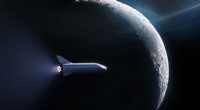
In a bid to accelerate the timeline, NASA has moved Artemis III forward from late 2028 to mid‑2027. During this mission, the Orion will rendezvous with a commercial lander—either SpaceX’s Starship or Blue Origin’s Blue Moon—before docking and preparing for the first crewed landing since Apollo.
Although the initial lunar touchdown was slated for Artemis III, NASA has now scheduled the actual landing for Artemis IV in 2028. The mission will last roughly 30 days, with two crew members spending about a week near the south pole while the other two remain in lunar orbit awaiting return. Detailed mission parameters will be confirmed closer to launch.
Upon successful completion of Artemis IV, NASA intends to conduct at least one lunar landing each year, establishing a sustainable human presence on the Moon.