Photo credit: Vadim Sadovski/Shutterstock
We may receive a commission on purchases made from links.
Space is becoming increasingly crowded. Private companies are launching satellites, NASA’s Artemis program is preparing to land astronauts on the Moon, and the International Space Station (ISS) remains a bustling hub of research. With that growth comes a sobering reality: the closer we venture into the void, the higher the chance of a fatal accident. Below we examine twelve of the most frightening scenarios that could claim a life in space.
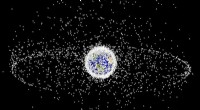
Every day, Earth’s orbit is intersected by thousands of pieces of human‑made debris and natural micrometeoroids, traveling at up to 18,000 mph. The ISS already faces this threat; in 2013 astronaut Chris Hadfield photographed a bullet‑shaped hole in the station’s solar array, a clear sign of a micrometeoroid strike. In 2025, China’s Shenzhou 20 suffered a mission‑terminating window crack after a collision with space junk. The cascading “Kessler syndrome” could turn a single impact into a field of deadly shrapnel, magnifying the danger for any craft or crew in low Earth orbit.
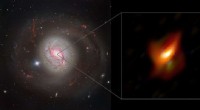
Black holes are a staple of science fiction, but the physics behind them are no less terrifying. A small, stellar‑mass black hole would "spaghettify" a person—stretching the body along the direction of gravity while compressing it laterally. A supermassive black hole, such as the one at the center of the Milky Way, would instead pull the traveler into its event horizon, effectively trapping them forever. While speculative, theoretical models suggest that even a white hole—if it exists—could eject matter in a wormhole, potentially returning the traveler to another universe. In any case, the forces involved dwarf human resilience.
There is no solid surface on planets like Jupiter, Saturn, Uranus, or Neptune. A person stranded over such a world would keep falling until reaching the core, where pressures exceed 1,000,000 psi and temperatures can reach 15,000 °F. At the same time, the atmosphere is composed of hydrogen, methane, and helium—flames that would ignite on contact with the human body. The likely outcome is rapid unconsciousness followed by a slow, brutal demise.
During atmospheric re‑entry, spacecraft encounter temperatures up to 6,998 °F. Insufficient shielding can cause catastrophic failure. In 2023, the Russian Progress MS‑23 cargo ship, laden with ISS waste, disintegrated within minutes upon re‑entry, leaving only a small debris field in the Pacific Ocean. The lesson is clear: heat shielding is a mission‑critical system.
Gamma‑ray bursts (GRBs) are the universe’s most energetic explosions, releasing more energy in a few seconds than the Sun will emit over 10 billion years. The intense gamma‑ray beam emitted by a collapsing star can sterilize an entire planet from 200 light‑years away. An astronaut caught in the line of fire would receive a lethal dose of ionizing radiation almost instantaneously.
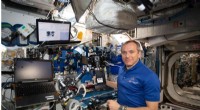
In low‑gravity environments, astronauts experience bone demineralization, muscle atrophy, and fluid redistribution. Prolonged missions to Mars or beyond exacerbate these effects: kidneys can develop stones or fail, the heart may change shape, and the optic nerve can be damaged by Spaceflight‑Associated Neuro‑Ocular Syndrome (SANS). Despite rigorous exercise protocols on the ISS, many astronauts report chronic back pain and other health issues upon return.
In 1975, Apollo‑Soyuz Test Project astronauts were exposed to nitrogen tetroxide fumes that flooded the cabin during re‑entry, causing pulmonary edema. The incident underscored the importance of strict environmental control systems and redundant safety checks. Modern spacecraft still rely on sophisticated gas monitoring to detect leaks before they become fatal.
If a human is exposed to the vacuum outside Earth’s atmosphere, the air in the lungs escapes almost instantaneously. Without oxygen, the brain loses consciousness in about 12 seconds; death follows within minutes. Although the body does not freeze instantly, extreme temperatures cause frostbite and swelling of tissues. In orbit, the Sun can heat the body; further from Earth, the body will slowly disintegrate due to micrometeoroid impacts over millennia.
During a 2013 spacewalk, Italian astronaut Luca Parmitano found his helmet filled with water, a leak that had gone unnoticed during maintenance. The water infiltrated his eyes and ears, compromising communication and endangering his life. The incident was contained, but it highlighted how a seemingly minor fault can become a lethal emergency.
Space is permeated by solar energetic particles, trapped particles in Earth’s magnetosphere, and galactic cosmic rays. Cumulative exposure increases the risk of cancer, cardiovascular disease, neurodegeneration, and acute radiation sickness. NASA and other agencies treat astronauts as regulated radiation workers and invest heavily in shielding and mission‑duration limits.
If an astronaut dies in low Earth orbit or on the Moon, protocols exist to recover the body within hours or days. For deep‑space missions, contingency plans include on‑board storage, cryopreservation, or even de‑hydration and freeze‑drying (the “Body Back” concept). These procedures aim to preserve dignity while acknowledging the logistical constraints of space travel.
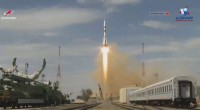
Launch failures have claimed lives on Earth: the 1986 Challenger disaster killed seven astronauts, and the 2025 SpaceX Starship 36 test ended in a spectacular explosion—though no one was injured. Moreover, debris from launch—booster stages, fairings—can fall back to Earth, posing risks to people and property. As spaceflight becomes routine, mitigating these hazards remains a top priority.