Solar storms may sound dramatic, but understanding them is crucial for protecting our planet’s technology and infrastructure. This article examines how solar outbursts energize Earth’s magnetic field, create spectacular auroras, and pose real threats to satellites, communications, and power grids.
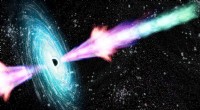
Solar storms are sudden, intense disturbances in the Sun’s atmosphere that unleash bursts of energy into space. The primary drivers are solar flares—explosive releases of magnetic energy on the solar surface—and coronal mass ejections (CMEs), which propel vast clouds of charged particles outward at millions of miles per hour.
These events peak during the Sun’s 11‑year cycle, known as the solar maximum, when sunspot activity is highest. During this period, the frequency and strength of geomagnetic storms increase, making the Earth more susceptible to space‑weather effects.
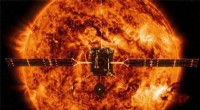
Space‑weather scientists monitor the Sun continuously using observatories such as NASA’s Solar Dynamics Observatory and NOAA’s Space Weather Prediction Center to forecast potential impacts.
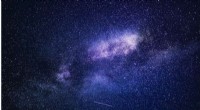
When the Sun’s energetic particles collide with Earth’s magnetosphere, they trigger the beautiful displays known as the aurora borealis in the north and aurora australis in the south. Charged particles excite atmospheric atoms and molecules, producing vibrant greens, reds, and purples that can travel hundreds of kilometers from the poles during intense storms.
Beyond the night‑sky spectacle, powerful geomagnetic storms can alter the upper atmosphere, disrupt radio and satellite communications, and, in extreme cases, damage the electrical grid. A notable example is the 1989 Quebec blackout, where a geomagnetic disturbance cut power to millions of residents for several hours.
National and international space agencies, including NASA and the European Space Agency, issue alerts and advisories to mitigate these risks.
Earth is normally encircled by two Van Allen radiation belts, which trap high‑energy particles from the Sun. However, during periods of heightened solar activity, temporary third belts can form. In 2012, NASA’s Van Allen Probes discovered a transient belt that lasted only a few weeks before being dispersed by a shock wave.
These fleeting belts pose a danger to satellites and future crewed missions, underscoring the need for continued monitoring and research.
As we approach the next solar maximum, solar activity is expected to rise, offering more opportunities to witness auroras far from the poles. Simultaneously, the potential for disruption grows. By refining our understanding of solar winds and geomagnetic coupling, scientists aim to improve predictive models and safeguard critical infrastructure.
Ongoing missions such as the Van Allen Probes, along with ground‑based networks, continue to shed light on the complex interactions between the Sun and Earth’s magnetosphere. These insights are vital for anticipating future space‑weather events and protecting our increasingly technology‑dependent society.
Our article was produced with the assistance of AI, then rigorously fact‑checked and edited by a HowStuffWorks editor to ensure accuracy and clarity.