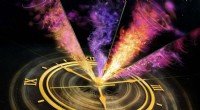
When the Sun erupts, Earth feels the ripple. A geomagnetic storm is the visible—and sometimes invisible—result of solar activity shaking our planet’s magnetic shield.

During periods of heightened solar activity, the Sun spews massive bursts of charged particles and magnetic fields—known as coronal mass ejections (CMEs). If a CME is directed toward Earth, it slams into our magnetosphere, setting off a cascade of electromagnetic effects.
The solar wind is a relentless stream of charged particles that carries the Sun’s magnetic field across the solar system. When this stream strikes Earth’s magnetic field—especially during a CME or a fast solar wind from a coronal hole—it triggers an efficient exchange of energy called magnetic reconnection.
Reconnection sends energetic particles into the upper atmosphere and ionosphere, where they collide with atoms, energizing the ionosphere and creating the dazzling light shows known as auroras. The Northern Lights can be witnessed in high‑latitude regions such as Alaska and Scandinavia.
These auroral currents also generate field‑aligned currents that produce strong horizontal variations in the magnetic field. The resulting disturbances can interfere with systems on the ground and in orbit.
Earth’s magnetic field naturally fluctuates, but space‑driven storms can cause sudden, severe changes. During the main phase of a geomagnetic storm, intense currents—particularly a westward current in the magnetosphere—flow, which is quantified by the disturbance storm time (Dst) index.
These currents induce electric currents in the Earth’s crust, known as geomagnetically induced currents (GICs). GICs can overload and damage power‑grid transformers, posing a serious risk to electricity providers. They can also affect pipelines and railways, and degrade radio signals and global navigation satellite systems (GNSS).
Geomagnetic storms make the space environment hostile for satellites. Charged particles and intense radiation can damage satellite components, while increased ionospheric density and heating can lift the upper atmosphere, creating additional drag that degrades satellite orbits.
Communication systems are equally vulnerable: radio signals, especially those used in aviation and maritime operations, can be absorbed or scattered, and GNSS accuracy can deteriorate or even fail during severe space‑weather events.
The National Oceanic and Atmospheric Administration’s Space Weather Prediction Center (NOAA SWPC) monitors solar activity continuously, using NOAA’s space‑weather scales to rate the severity of geomagnetic activity and issue timely alerts.
Solar activity follows an 11‑year cycle. During solar maximum, when the Sun’s magnetic field flips and sunspot numbers peak, CMEs and flares become more frequent. Fast CMEs directed at Earth compress the dayside magnetosphere and can trigger major geomagnetic storms.
Preparation is key. Power‑grid engineers design infrastructure to withstand GICs, while satellite operators can adjust orbits and shut down sensitive equipment during predicted storms. By studying the evolution of magnetic storms, scientists can improve protection for the technology that keeps our modern world running.
© 2026 HowStuffWorks. This article was produced with AI assistance and subsequently fact‑checked and edited by a HowStuffWorks editor.