By: E-maginne Grant | Jun 17, 2025
Image: George Pachantouris / Getty Images
When the Moon, Earth, and Sun line up just right, the sky transforms into one of nature’s most dramatic spectacles. Each eclipse type reveals a different facet of our celestial mechanics, offering scientists and sky‑watchers alike a unique glimpse into the dance of planetary bodies.
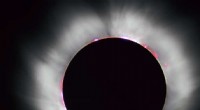
A total solar eclipse happens when the Moon completely covers the Sun, casting a narrow path of darkness across Earth’s surface. Those within the path of totality witness the Sun’s corona – a shimmering halo of plasma that normally remains hidden – as daylight fades to twilight.
These events are relatively rare: a total solar eclipse occurs roughly once every 18 months somewhere on Earth, but any given location sees one only every 300 to 400 years. Eye protection is essential; the Sun’s intense light can permanently damage the retina.
In a partial eclipse, the Moon covers only a portion of the Sun. The result is a noticeable dimming of daylight, but the Sun remains largely visible. Partial eclipses are more common than total ones and can be safely observed with the proper filters.
During an annular eclipse, the Moon is at the farthest point of its elliptical orbit, making it appear slightly smaller than the Sun. The Moon’s disk does not fully cover the Sun, creating a striking “ring of fire” that encircles the dark lunar silhouette.
A hybrid eclipse transitions between total and annular along its trajectory. Depending on your viewing location, you may experience a brief total eclipse or witness the classic ring of fire. This rare phenomenon results from the curvature of Earth and the Moon’s orbital dynamics.
A total lunar eclipse occurs when the Moon passes entirely into Earth’s umbra – the deepest part of its shadow. The atmosphere refracts sunlight, painting the Moon a deep reddish hue often called a “blood moon.”
In a partial lunar eclipse, only a segment of the Moon enters the umbra. The eclipsed portion darkens noticeably while the rest stays illuminated, making this type of eclipse easy to view with the naked eye.
The most subtle of all, a penumbral eclipse occurs when the Moon traverses Earth’s penumbra – the outer shadow. The brightness shift is so slight that many observers may miss it entirely.
Eclipses happen because the Moon’s orbital plane is inclined by about 5 degrees relative to Earth’s orbit around the Sun. This tilt means that the Moon’s shadow rarely falls on Earth or that Earth’s shadow rarely falls on the Moon. When the alignment is just right, the Sun, Moon, and Earth become collinear, producing a solar or lunar eclipse.
These events illustrate the interplay of gravity, motion, and celestial geometry that governs our solar system. The path and duration of an eclipse depend on the exact alignment of the umbra and penumbra.
This article was generated with AI assistance and subsequently fact‑checked and refined by a HowStuffWorks editor to ensure accuracy and clarity.