On Earth, a smartphone lets us send texts, photos, and video from almost anywhere in seconds. That level of instant, high‑bandwidth communication is a cornerstone of modern life and research. In space, however, the sheer distances and hostile environment make such connectivity a formidable challenge. Radio waves travel slowly and degrade over millions of kilometres, and planetary motion can even block signals entirely.
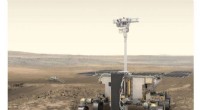
For a Mars colonist, communication delays can stretch from 3 to 21 minutes, and the rover data‑rate tops out at roughly 256 kbps—comparable to dial‑up speeds in the mid‑1990s. Streaming live video or running cloud services is simply not feasible with current technology.
These obstacles have driven scientists to devise a range of solutions. Below are the ten most promising concepts that could transform how we communicate across the solar system and beyond.
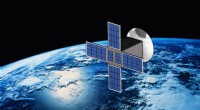
Imagine a constellation of relay satellites stretching from Mercury to Pluto—a 3.7‑billion‑mile (6‑billion‑km) chain that mirrors Arthur C. Clarke’s early vision of a global satellite network. Since 1945, satellites now orbit nearly every planetary body, enabling global Earth communications. Extending this concept would allow any spacecraft or planetary surface to transmit data to any other point in the system via a series of hops.
George E. Mueller and John E. Taber first proposed such a network in 1959, and later researchers envisioned a system with three sun‑orbiting satellites and additional geosynchronous or polar orbits around each planet. While construction costs remain high, the infrastructure would dramatically reduce delays and increase reliability.
Radio frequencies are limited by bandwidth and beam spread, whereas laser light—shorter wavelengths and higher energy density—can transmit orders of magnitude more data with less power. NASA’s Deep Space Optical Communications (DSOC) project demonstrates 10‑to‑100‑fold improvements over current radio systems, potentially enabling live HD video from Mars.
Although laser communication requires precise pointing and atmospheric mitigation, initial low‑rate demonstrations and planned lunar‑orbit tests confirm its viability for future missions.
Rather than launching dedicated relays, future missions could equip every orbiter, lander, and rover with standardized inter‑satellite radios. This creates a dynamic, mesh‑like network that mirrors our terrestrial internet—allowing scientists to access real‑time data from any platform via a unified interface.
IEEE Spectrum highlighted that such a network would let researchers examine Martian geology, Europa’s ice‑cover, or Venus’s cloud patterns as if they were on a home desktop.
Standard TCP/IP assumes continuous, low‑latency connections, which is unrealistic across interplanetary distances. Disruption‑Tolerant Networking (DTN) retains data packets until a link is re‑established, preventing loss during long outages. NASA’s 2008 DTN test successfully transmitted images from a spacecraft 20 million mi (32 Mkm) away.
Conjunctions between Earth and Mars—when the Sun blocks direct radio paths—can last weeks. Researchers propose placing two communication satellites in a non‑Keplerian orbit around Mars, maintained by ion‑propulsion, to provide continuous coverage even during alignment. This approach keeps signal latency low and mitigates the 780‑day conjunction cycle.
Project Icarus envisions a generation‑ship that periodically ejects empty fuel canisters outfitted with radio relays. These “breadcrumb” nodes form a hop‑by‑hop chain, drastically reducing each link’s distance and the power required for transmission. The concept, proposed by engineer Pat Galea, could make long‑range data rates feasible without massive antenna arrays on the ship.
Detecting faint signals from distant probes demands enormous collecting area. Project Icarus recommends multiple Earth‑based arrays—each spanning miles—to capture weak transmissions and filter out atmospheric noise. Distributed locations ensure continuous coverage as Earth rotates and weather conditions vary.
Gravitational lensing lets massive bodies bend and focus light. A relay spacecraft positioned about 51 billion mi (82 billion km) from the Sun, opposite the interstellar ship, could magnify its signals via the Sun’s gravity and return them to Earth using laser links, dramatically lowering transmitter power requirements.
By transmitting multiple identical copies of a signal and then recombining the surviving photons with a Guha receiver, mission control can reconstruct messages even when individual photons are lost. This technique effectively “shreds” and reassembles data, enabling communication across interplanetary distances that would otherwise render signals undetectable.
Even with laser links, light‑speed limits create multi‑minute delays within the solar system and multi‑year delays to Alpha Centauri. Hypothetical faster‑than‑light (FTL) communication using neutrinos or other exotic particles has been explored, but requires a breakthrough that would violate special relativity. While current experiments (e.g., the 2011 CERN neutrino anomaly) have been debunked, the concept drives theoretical research into new physics.
Distance, planetary motion, and space radiation all contribute to high latency and signal degradation, making reliable two‑way communication difficult.
Future solutions include a solar‑system satellite mesh, laser‑based data links, and disruption‑tolerant networking to deliver faster, more reliable connectivity.
While streaming live video from Mars is still a dream, ongoing advances in laser communication and inter‑satellite networking bring us closer to that reality. The day when astronauts can chat with Earth as if on a coffee table is drawing nearer.