In a landmark 2023 paper in the Astronomical Journal, Caltech astronomers Mike Brown and Konstantin Batygin presented compelling evidence for a ninth planet orbiting at an astonishing 93 billion miles (150 billion km) from the Sun.
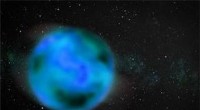
Dubbed Planet Nine, the object lies roughly 15 times farther from the Sun than Pluto and is estimated to weigh about 5,000 times more than the dwarf planet—a mass that rivals that of the larger planets.
Brown explained that “Planet Nine would be a true ninth planet,” noting its gravity could dominate a region of the solar system larger than any known planet, making it the most planet-like object we have ever studied.
Many outside the field wonder: if Planet Nine is so massive, why did it take so long to find it? The answer lies in its extreme distance and faintness. At 93 billion miles, sunlight reaching the planet is roughly 300,000 times weaker than what we receive on Earth, rendering it nearly invisible to even the most powerful telescopes.
Historically, astronomers have inferred unseen planets from subtle perturbations in the orbits of known bodies. This method led to Neptune’s discovery in 1846, when the deviations of Uranus’s path were attributed to a yet‑unknown planet. Over the past 160 years, researchers have followed a similar approach, studying planetary positions and searching for anomalies.
The 1990s discovery of the Kuiper Belt—a vast region populated by thousands of small icy bodies—added new clues. In 2014, researchers Chad Trujillo and Scott Sheppard reported that certain distant Kuiper Belt objects displayed unusual orbital alignments, suggesting the influence of a massive, unseen planet. While early simulations refuted this hypothesis, subsequent observations by Brazilian and Japanese teams pointed to a different set of objects that could be shepherded by a distant planet.
Brown and Batygin revisited these findings and noted that the six most distant objects in Trujillo’s and Sheppard’s study shared a consistent orientation of their elliptical orbits. Through extensive computer simulations—enabled by modern supercomputing power—they tested numerous scenarios. When they modeled a massive planet in an anti‑aligned orbit (with its perihelion 180° from the other objects), the simulated Kuiper Belt objects reproduced the observed alignment, strongly supporting the existence of Planet Nine.
Although the precise current position of Planet Nine remains uncertain, its inferred orbital path provides a target for future observational campaigns. Brown has expressed enthusiasm for other astronomers to join the search, hoping that combined efforts will soon reveal the planet’s face to the sky.