1. Extreme Temperature and Radiation:
* Heat: The Sun's surface temperature is around 5,500°C, and its core reaches millions of degrees Celsius. This intense heat makes it impossible to send traditional probes or land spacecraft on its surface.
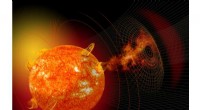
* Radiation: The Sun emits vast amounts of radiation, including X-rays, ultraviolet light, and charged particles. This radiation can damage or destroy sensitive equipment.
2. Distance and Size:
* Distance: The Sun is 149.6 million kilometers (93 million miles) from Earth. This makes it difficult and time-consuming to send spacecraft close enough for detailed observations.
* Size: The Sun is massive, and even the most advanced telescopes can only capture a small portion of its surface at a time.
3. Constant Change:
* Dynamic Nature: The Sun is a constantly changing star. Its activity, including solar flares, coronal mass ejections, and sunspots, varies over time, making it difficult to study its long-term behavior.
* Fast Processes: Many processes occurring on the Sun happen extremely quickly, requiring advanced instrumentation and sophisticated analysis techniques to capture them.
4. Limited Access:
* Atmosphere: Earth's atmosphere blocks much of the Sun's radiation, especially in the ultraviolet and X-ray wavelengths. This necessitates using telescopes in space or developing specialized techniques to analyze the data.
* Observational Limitations: Observing the Sun directly can be dangerous for human eyes and equipment. Special filters and protective measures are needed for safe observation.
5. Technical Challenges:
* Instrumentation: Building instruments that can withstand the Sun's harsh environment and provide accurate measurements is a significant engineering challenge.
* Data Analysis: The vast amount of data collected from solar observations requires powerful computers and sophisticated algorithms for analysis and interpretation.
Despite these challenges, scientists continue to develop new technologies and innovative methods to study the Sun. Space telescopes, sophisticated probes, and advanced computational models are crucial tools for gathering evidence and improving our understanding of our nearest star.