Surface Features:
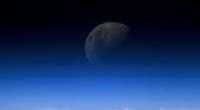
* Maria (Latin for "seas"): Large, dark, smooth plains formed by ancient volcanic eruptions.
* Highlands: Bright, mountainous regions, heavily cratered.
* Craters: Impact craters of various sizes, ranging from microscopic to hundreds of kilometers across.
* Rilles: Long, narrow valleys or channels, likely formed by lava flows or tectonic activity.
* Mascons (Mass Concentrations): Areas of denser rock beneath some maria, detected by their gravitational pull.
Composition & Geology:
* Regolith: A layer of loose, broken rock and dust covering the lunar surface.
* Composition: Primarily composed of silicate minerals (e.g., olivine, pyroxene), with traces of metals like iron and titanium.
* Internal Structure: A thin crust, a partially molten mantle, and a small, solid core.
Orbit & Rotation:
* Tidal Locking: The Moon is tidally locked to Earth, meaning it always shows the same face to us.
* Synchronous Rotation: The Moon's rotation period is the same as its orbital period around Earth.
* Orbit: An elliptical path around Earth, resulting in slight variations in its distance from us.
Atmosphere & Temperature:
* Exosphere: A very thin, tenuous atmosphere, with little to no atmospheric pressure.
* Temperature Extremes: Surface temperatures range from extremely hot in direct sunlight (over 120°C) to extremely cold in the shade (below -170°C).
Other Observations:
* Lunar Dust: A fine, abrasive dust that covers the surface and poses challenges for lunar missions.
* Magnetic Field: A weak and localized magnetic field, suggesting a largely inactive core.
* Evidence of Water Ice: Confirmed presence of water ice in permanently shadowed craters at the lunar poles.
* Seismic Activity: Moonquakes detected by seismometers placed on the lunar surface, suggesting internal activity.
Observations Through Missions:
* Lunar Reconnaissance Orbiter (LRO): Detailed maps of the lunar surface, including high-resolution images and topographic data.
* Apollo Missions: Collected lunar samples, conducted experiments, and provided crucial insights into the Moon's history and composition.
* Other Missions: (e.g., Clementine, Lunar Prospector, Chandrayaan-1) provided valuable data about the lunar surface, composition, and polar regions.
This is just a brief overview. Ongoing missions and research continuously reveal new information about the Moon, expanding our understanding of this celestial neighbor.