* Nuclear Fusion: At the sun's core, hydrogen atoms fuse to form helium, releasing enormous amounts of energy.
* Electromagnetic Spectrum: This energy is emitted in the form of electromagnetic radiation, which includes visible light, infrared radiation, ultraviolet radiation, and other forms.
* Photon Propagation: Electromagnetic radiation travels as tiny packets of energy called photons. Photons have no mass and can travel through the vacuum of space at the speed of light.
* Solar Wind: While most energy travels as electromagnetic radiation, a small portion travels as charged particles (protons and electrons) that are constantly being ejected from the sun. This is called the solar wind.
Key Points:
* No Medium Required: Electromagnetic radiation doesn't need a medium (like air or water) to travel. It can move through the vacuum of space.
* Speed of Light: Photons travel at the speed of light (approximately 299,792,458 meters per second).
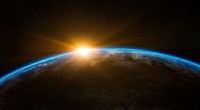
* Energy Transfer: When photons interact with matter, they can transfer energy. This is how the sun's energy reaches Earth and warms our planet.
In Summary: The sun's energy is transferred through space by electromagnetic radiation, specifically photons, which travel at the speed of light. This process allows the sun's energy to reach Earth and sustain life on our planet.