* Light is emitted from its source: This means the source produces light waves, which then travel outwards. Think of a light bulb; it doesn't carry light on its filament, it *creates* the light.
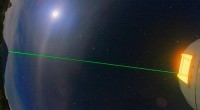
* Light travels in straight lines: Once emitted, light travels in a straight line in a vacuum (empty space). It can bend (refract) when it passes through different mediums like water or glass.
* Light travels as electromagnetic waves: Light is a type of electromagnetic radiation, which means it's made up of oscillating electric and magnetic fields that travel together. These waves don't need a medium to travel, which is why light can travel through the vacuum of space.
So, to summarize:
* Light doesn't travel *on* its source.
* Light is emitted *from* its source.
* Light travels in a straight line as electromagnetic waves.
Let me know if you'd like to know more about how light interacts with different materials!