What it is:
* Invisible Force: You can't see or touch a gravitational field, but it's always there.
* Attraction: Gravity is always an attractive force. Every object with mass pulls on every other object with mass.
* Strength: The strength of the gravitational field depends on the mass of the object creating the field and the distance from that object. More massive objects create stronger fields, and the farther away you are, the weaker the field.
* Continuous: The gravitational field extends outward infinitely, though it gets weaker with distance.
How it works:
* Distortion of Spacetime: According to Einstein's theory of General Relativity, gravity isn't a force in the traditional sense. Instead, objects with mass warp the fabric of spacetime (the combination of space and time). The curvature of spacetime is what we experience as gravity. Imagine a heavy ball placed on a stretched sheet. The ball creates a dip in the sheet, and objects rolling nearby will be pulled towards it.
Examples:
* Earth's Gravity: We are constantly being pulled towards the center of the Earth by its gravitational field. This is what keeps us on the ground and what causes objects to fall when dropped.
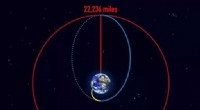
* The Moon's Orbit: The Moon orbits the Earth because of the Earth's gravitational field.
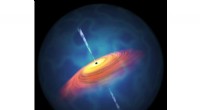
* Black Holes: Black holes have incredibly strong gravitational fields that even light can't escape from.
Importance:
* Formation of Stars and Planets: Gravity plays a crucial role in the formation of stars and planets.
* Tides: The Moon's gravitational pull causes the tides on Earth.
* Solar System: The Sun's gravitational field holds the entire solar system together.
In short: The gravitational field is a fundamental force that governs the behavior of everything in the universe. It's a fascinating and complex subject that continues to be studied and explored by scientists.