General Properties:
* It's a type of electromagnetic radiation. Like visible light, radio waves, and X-rays, infrared radiation is part of the electromagnetic spectrum.
* It's invisible to the human eye. We perceive infrared radiation as heat.
* It's emitted by all objects. All objects with a temperature above absolute zero (-273.15°C or -459.67°F) emit infrared radiation. The hotter the object, the more infrared radiation it emits.
* It can travel through a vacuum. Unlike sound, infrared radiation does not need a medium to travel. This is how it reaches us from the Sun.
Applications:
* Thermal Imaging: Infrared cameras detect infrared radiation and create images that show the temperature distribution of an object or scene. This has applications in medical imaging, security, and building inspections.
* Heating: Infrared heaters emit infrared radiation that can be used to heat objects and spaces directly. This is an efficient heating method compared to traditional convection heating.
* Communication: Infrared technology is used for short-range communication, such as in remote controls and data transfer between devices.
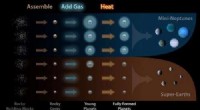
* Astronomy: Infrared telescopes can observe objects that are too cool or too dusty to be seen in visible light. They are used to study the early universe, star formation, and exoplanets.
Health and Safety:
* Generally safe in low doses. The infrared radiation we experience from the Sun and everyday objects is generally not harmful.
* High doses can be dangerous. Excessive exposure to high-intensity infrared radiation, such as from industrial equipment or lasers, can cause burns or eye damage.
Some common misconceptions:
* Infrared radiation is not a form of microwaves. While both are electromagnetic radiation, they have different wavelengths and properties.
* Infrared radiation does not cause cancer. While UV radiation (sunlight) can cause skin cancer, infrared radiation does not have the same effect.
I hope this information is helpful!