1. Internal Structure:
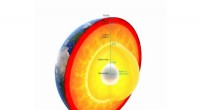
* Depth of the Convection Zone: Helioseismology has precisely determined the depth of the convection zone, where energy is transported by the movement of hot gas, to be around 200,000 kilometers.
* Size of the Radiative Zone: The size of the radiative zone, where energy is transported by radiation, has also been accurately measured.
* Location of the Tachocline: This region, located at the boundary between the radiative and convective zones, is characterized by a sharp change in rotation rate. Its precise location has been determined through helioseismology.
2. Dynamics and Composition:
* Rotation Profile: Helioseismology has revealed that the Sun rotates differentially, meaning different parts of the Sun rotate at different speeds. The equator rotates faster than the poles.
* Internal Flows: Studies have identified various internal flows within the Sun, including meridional circulation (flows from the equator towards the poles) and giant cells (large-scale convection cells).
* Abundances of Elements: Helioseismology can provide information about the abundances of different elements in the Sun's interior, including helium and heavy elements. This data helps us understand the Sun's evolution and composition.
3. Solar Activity:
* Predicting Solar Flares and Coronal Mass Ejections: Helioseismology can detect changes in the Sun's internal structure and dynamics that precede solar flares and coronal mass ejections, which are powerful eruptions that can have significant effects on Earth. This information can be used to improve space weather forecasting.
* Understanding the Sun's Magnetic Field: Helioseismology is providing insights into the generation and evolution of the Sun's magnetic field, which is responsible for various solar activities, such as sunspots and solar flares.
4. Other Discoveries:
* Presence of Granulation: Helioseismology has confirmed the existence of granulation, the pattern of small, bright cells on the Sun's surface, which are caused by convection.
* Internal Structure of Other Stars: The techniques used in helioseismology can be applied to other stars, allowing us to study their internal structure and dynamics.
In summary, helioseismology has revolutionized our understanding of the Sun, providing unprecedented insights into its internal structure, dynamics, and activity. This knowledge is crucial for understanding the Sun's role in the solar system and for forecasting space weather events.