1. Gravitational Interactions:
* Orbital Period: By observing the orbital period of a celestial object around another, we can calculate its mass using Kepler's laws of planetary motion. This is how we determine the masses of planets, stars, and even black holes.
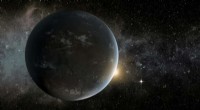
* Perturbations: The gravitational pull of a massive object can slightly alter the orbits of other objects nearby. By observing these tiny "perturbations," we can infer the mass of the perturbing object. This method is used to find exoplanets, planets outside our solar system.
2. Stellar Properties:
* Luminosity and Temperature: For stars, we can estimate their mass using their brightness (luminosity) and surface temperature. This method relies on theoretical models of stellar evolution.
* Binary Star Systems: In binary star systems, where two stars orbit each other, we can measure their individual masses by observing their orbital period and the distance between them.
3. Other Methods:
* Doppler Shift: Observing the Doppler shift of light from a star can reveal the presence of a companion object (like a planet) and its mass.
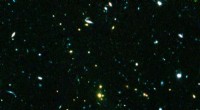
* Lensing: The gravity of massive objects can bend light from objects behind them, a phenomenon called gravitational lensing. By analyzing the lensing effect, we can calculate the mass of the object doing the lensing.
Challenges:
* Distance: Measuring mass in outer space becomes increasingly difficult for objects that are far away.
* Indirect Measurement: Most methods rely on indirect measurements and mathematical models, which can introduce uncertainties.
* Complexity: The complexities of celestial objects and their interactions make accurate mass measurements challenging.
Overall, measuring mass in outer space is a fascinating scientific challenge that requires a combination of observations, mathematical models, and our understanding of fundamental physics.