1. Rocket Science:
* Newton's Laws of Motion:
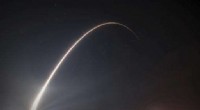
* First Law (Inertia): The Saturn V rocket, the launch vehicle, needed to overcome Earth's gravitational pull and inertia to accelerate the Apollo spacecraft.
* Second Law (F=ma): The rocket engines produced thrust by expelling hot gas, applying a force to the spacecraft, thus accelerating it.
* Third Law (Action-Reaction): For every action, there is an equal and opposite reaction. The rocket's exhaust gases pushed downwards, propelling the rocket upwards.
* Conservation of Momentum: As the rocket burned fuel, its mass decreased. To maintain a constant upward velocity, the rocket engines had to adjust their thrust.
* Orbital Mechanics: The spacecraft entered an elliptical orbit around Earth before heading towards the Moon. This involved precise calculations based on:
* Kepler's Laws of Planetary Motion
* Gravitational forces between Earth and the spacecraft
2. Lunar Landing:
* Gravity: The Moon's gravity is about 1/6th that of Earth's. This meant the lunar module had to descend more slowly and with greater precision.
* Atmospheric Entry: The Moon has no atmosphere, so there was no air resistance to slow down the descent. The lunar module had to rely entirely on its descent engine.
* Thrust Control: Precise control of the descent engine was critical for a safe landing.
* Fuel Management: The limited fuel supply for the descent engine made precise calculations and trajectory adjustments essential.
3. Lunar Exploration:
* Low Gravity: Astronauts experienced a significant reduction in weight, affecting their movement and the way they interacted with their surroundings.
* Vacuum Environment: The absence of an atmosphere meant extreme temperature fluctuations, the need for special suits, and the lack of sound propagation.
4. Return to Earth:
* Escape Velocity: The lunar module's ascent engine needed to generate enough thrust to escape the Moon's gravity.
* Trans-Earth Injection: A precise burn of the Apollo spacecraft's engine sent it on a trajectory back to Earth.
* Atmospheric Re-entry: The spacecraft had to precisely orient itself and use its heat shield to safely re-enter Earth's atmosphere.
* Parachute Deployment: Parachutes slowed the spacecraft's descent to a safe landing in the ocean.
Key Technologies:
* Rocket Engines: The Saturn V and lunar module engines were powerful and reliable, capable of generating the necessary thrust for the mission.
* Guidance and Navigation Systems: Precise navigation and control systems were essential for maneuvering the spacecraft and landing on the Moon.
* Computer Systems: Early computers were used for complex calculations and trajectory adjustments.
* Life Support Systems: Specialized systems maintained a breathable atmosphere, regulated temperature, and provided water and food for the astronauts.
The Apollo moon landing involved a sophisticated understanding and application of many physics principles. It's a testament to the power of science and engineering to push the boundaries of human exploration.