1. Revolutionized our understanding of space, time, and gravity:
* Special Relativity: It showed that space and time are not absolute, but relative to the observer's motion. It introduced the concepts of time dilation and length contraction, which have implications for high-speed travel and the understanding of the universe.
* General Relativity: It proposed that gravity is not a force, but a curvature of spacetime caused by mass and energy. This revolutionized our understanding of gravity and has led to predictions like the bending of light around massive objects, the existence of black holes, and the expansion of the universe.
2. Foundation of modern physics:
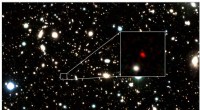
* Cosmology: Relativity is essential for understanding the evolution and structure of the universe, including the Big Bang, the formation of galaxies, and the fate of the universe.
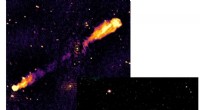
* Astrophysics: It is used to understand the behavior of stars, galaxies, and other celestial objects, including the phenomena of gravitational lensing, gravitational waves, and black hole mergers.
* Particle physics: Relativity plays a crucial role in understanding the interactions of fundamental particles and the development of the Standard Model.
3. Practical applications:
* GPS: The satellites used for GPS navigation rely on relativistic corrections to account for the time dilation experienced by the satellites due to their high speed and position in a weaker gravitational field.
* Nuclear power: Relativistic effects are important in the operation of nuclear power plants, particularly in the calculation of nuclear reactions.
* Medical imaging: Positron emission tomography (PET) scans, a widely used medical imaging technique, rely on relativistic principles for their operation.
4. Fundamental to our understanding of the universe:
* Spacetime and gravity: Relativity provides a framework for understanding the very fabric of the universe, including its geometry and the force of gravity.
* Black holes: Relativity predicts the existence of black holes, regions of spacetime with such strong gravity that nothing, not even light, can escape.
* Gravitational waves: Relativity predicted the existence of gravitational waves, which were finally detected in 2015.
In summary, Einstein's theory of relativity is a cornerstone of modern physics and continues to shape our understanding of the universe and its fundamental laws. It has revolutionized our understanding of space, time, gravity, and has led to numerous practical applications in technology and everyday life.