Here's why:
* Light Microscopes: Traditional light microscopes use visible light to illuminate the specimen. However, light has a limited resolution, meaning it can't distinguish between objects that are very close together.
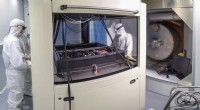
* Electron Microscopes: Electron microscopes overcome this limitation by using a beam of electrons instead of light. Electrons have a much shorter wavelength than light, allowing for much higher resolution and the ability to view much smaller objects.
Types of Electron Microscopes and their illumination sources:
* Transmission Electron Microscope (TEM): A high-voltage electron beam is passed through a very thin specimen. The transmitted electrons are then projected onto a fluorescent screen or a photographic plate, creating an image.
* Scanning Electron Microscope (SEM): A focused electron beam is scanned across the surface of the specimen. Secondary electrons emitted from the specimen are then detected, creating a 3D image of the surface.
Therefore, the source of illumination in both TEM and SEM is a beam of electrons.