* Ancient Greeks: Philosophers like Democritus and Plato proposed that light traveled in straight lines, forming the foundation of our understanding of optics.
* Ibn al-Haytham (Alhazen): In the 11th century, this Arab scholar conducted groundbreaking experiments on light, demonstrating that vision works by light entering the eye, not rays emanating from the eye. He also described the phenomenon of refraction and studied the properties of mirrors and lenses.
* Isaac Newton: In the 17th century, Newton proposed the corpuscular theory of light, suggesting that light is composed of tiny particles. He also conducted experiments on prisms and discovered that white light is made up of different colors.
* Christiaan Huygens: Around the same time, Huygens proposed the wave theory of light, suggesting that light travels as waves. He explained the phenomena of reflection and refraction using wave theory.
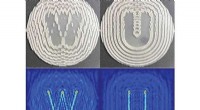
* Thomas Young: In the early 19th century, Young performed the famous double-slit experiment, which provided strong evidence for the wave nature of light.
* James Clerk Maxwell: In the mid-19th century, Maxwell unified electricity and magnetism, showing that light is an electromagnetic wave. This theory predicted the existence of other electromagnetic waves, such as radio waves, which were later discovered by Heinrich Hertz.
So, while Ibn al-Haytham made significant contributions to the understanding of light, it was Thomas Young who provided the crucial evidence for its wave nature. However, it was James Clerk Maxwell who finally unified light with electricity and magnetism, solidifying its status as an electromagnetic wave.
It's important to remember that science is a collaborative effort, and the discovery of light waves is a testament to the contributions of many brilliant minds throughout history.