* Cloud Coverage: Clouds act as a barrier, blocking direct sunlight.
* Rays of Light: When sunlight penetrates through gaps in the clouds, we see distinct rays of light. These rays are not curved or bent, but rather travel in straight lines from the sun, through the gaps, and down to our eyes.
* Straight Line Propagation: The straight line nature of these rays is a fundamental property of light. It doesn't bend around corners unless it encounters a medium that can refract it (like water or glass).
In essence, the sunlight shafts we see are a visual representation of light traveling in straight lines. This is because the cloud acts like a giant pinhole camera, allowing only a small beam of sunlight to pass through.
Here are some other ways sunlight demonstrates the straight line travel of light:
* Shadows: Shadows are formed because light travels in straight lines. Objects block light, creating a dark area behind them.
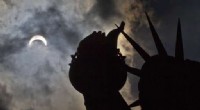
* Solar Eclipses: During a solar eclipse, the moon blocks the sun's light, creating a shadow on Earth. This only happens because light travels in straight lines.
By observing these phenomena, we can understand the fundamental nature of light and its behavior.