* No Fluid Medium: The Archimedes principle relies on the presence of a fluid medium (like water or air) that exerts buoyant force on the submerged object. In the vacuum of space, there is no such fluid medium surrounding a satellite.
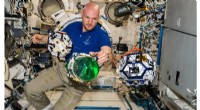
* Weightlessness: Objects in orbit are in a state of freefall, experiencing apparent weightlessness. This means there is no "downward" force acting on them due to gravity, which is a crucial component of buoyancy.
However, there are some analogies to the Archimedes principle in orbital mechanics:
* Orbital Mechanics and Buoyancy: You can think of a satellite's orbit as a kind of "equilibrium" where the satellite's centrifugal force balances the gravitational force pulling it towards the Earth. In this sense, the satellite is "floating" in the gravitational field, much like a buoy in water.
* Density and Orbital Altitude: There is a relationship between the density of a celestial body and the altitude of a satellite in orbit. More massive and dense bodies have stronger gravity, requiring satellites to orbit at a lower altitude to maintain a stable orbit. This is somewhat analogous to how denser fluids exert a stronger buoyant force.
Conclusion: While the Archimedes principle itself doesn't apply directly to satellites in orbit, there are some conceptual parallels between the principle and the dynamics of orbital mechanics.