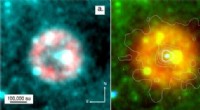
* Stars: The most prominent components of galaxies, producing light and energy through nuclear fusion.
* Stellar Remnants: These are the leftover cores of stars after they have exhausted their nuclear fuel, such as white dwarfs, neutron stars, and black holes.
* Interstellar gas and dust: This material fills the space between stars, and is the raw material for star formation.
* Dark matter: This mysterious, non-luminous substance is thought to make up a significant portion of a galaxy's mass and plays a crucial role in its structure and evolution.
Galaxies come in different shapes and sizes, with the most common types being:
* Spiral Galaxies: These have a central bulge surrounded by a flat disk with spiral arms. Our own Milky Way is a spiral galaxy.
* Elliptical Galaxies: These are smooth, oval-shaped galaxies with little gas and dust.
* Irregular Galaxies: These are galaxies that do not fit into the spiral or elliptical classifications.
Key features of galaxies:
* Size: Galaxies can range from dwarf galaxies containing a few million stars to giant galaxies containing trillions of stars.
* Rotation: Most galaxies rotate, with the stars and gas moving in orbits around the galaxy's center.
* Evolution: Galaxies evolve over time, with stars forming and dying, and the galaxies themselves interacting with each other.
* Gravity: Gravity is the force that holds galaxies together.
Understanding galaxies is fundamental to astrophysics:
* It helps us understand the evolution of the universe: Galaxies are the building blocks of the universe, and studying them gives us insights into how the universe formed and evolved.
* It allows us to study the formation and evolution of stars: Galaxies provide the environments where stars form and evolve.
* It provides clues about the nature of dark matter: The rotation of galaxies and their gravitational lensing effects provide evidence for the existence and properties of dark matter.
In essence, galaxies are vast cosmic structures that provide a framework for understanding the universe's largest-scale processes. Studying them helps us unveil the secrets of our universe and our place within it.