* Theory of Special Relativity (1905): This theory changed our perception of space and time, stating that they are not absolute but relative to the observer's motion. It introduced the famous equation E=mc², which demonstrates the equivalence of mass and energy.
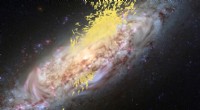
* Theory of General Relativity (1915): This theory expanded on special relativity, explaining gravity as a curvature of spacetime caused by mass and energy. It predicted phenomena like gravitational lensing and the bending of light by gravity, which have been confirmed by observation.
Beyond these theories, Einstein is also recognized for his significant contributions to:
* The photoelectric effect: This phenomenon, explained by Einstein in 1905, demonstrated the particle nature of light and paved the way for quantum mechanics.
* Brownian motion: He provided a mathematical explanation for the random movement of particles suspended in a fluid, further solidifying the atomic theory of matter.
* The development of the unified field theory: Though ultimately unsuccessful, his pursuit of a unified theory to explain all forces of nature influenced generations of physicists.
Einstein's work profoundly impacted scientific thought and continues to shape our understanding of the universe. His legacy as a scientific genius and a symbol of intellectual curiosity remains unparalleled.