1. The Sun's Core: The Source of Energy
* The Sun's core is a massive nuclear reactor. Here, hydrogen atoms fuse to form helium, releasing immense energy in the form of photons (light particles) and heat.
2. Energy Transport through the Sun
* Radiation Zone: Photons journey outwards, constantly colliding with particles, being absorbed and re-emitted, slowing their progress.
* Convection Zone: Hot, ionized gas rises, carrying energy to the Sun's surface.
3. The Photosphere: The Visible Surface
* The photosphere is the outermost layer of the Sun we see. It's a thin layer of gas where the temperature and density are suitable for photons to escape into space.
4. Thermal Radiation
* As the Sun's energy reaches the photosphere, the hot, charged particles (electrons and ions) within the plasma oscillate rapidly.
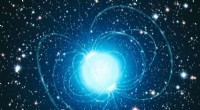
* These oscillations create electric and magnetic fields that fluctuate.
* These fluctuating fields generate electromagnetic waves, which propagate outwards as light, heat, and other forms of electromagnetic radiation.
5. The Electromagnetic Spectrum
* The Sun emits a wide range of electromagnetic waves, including:
* Visible light: The wavelengths we can see as colors.
* Infrared radiation: Heat.
* Ultraviolet radiation: A major source of energy for Earth's atmosphere and can cause sunburn.
* X-rays: Penetrating radiation emitted by the Sun's corona.
In Summary: The Sun's energy, produced through nuclear fusion in its core, is transported to the photosphere where the rapidly moving charged particles emit electromagnetic waves across the spectrum. This process, called thermal radiation, is the primary way the Sun's energy reaches Earth and supports life.